Three access possibilities
- Existing trim opening: suitable for some internal service work.
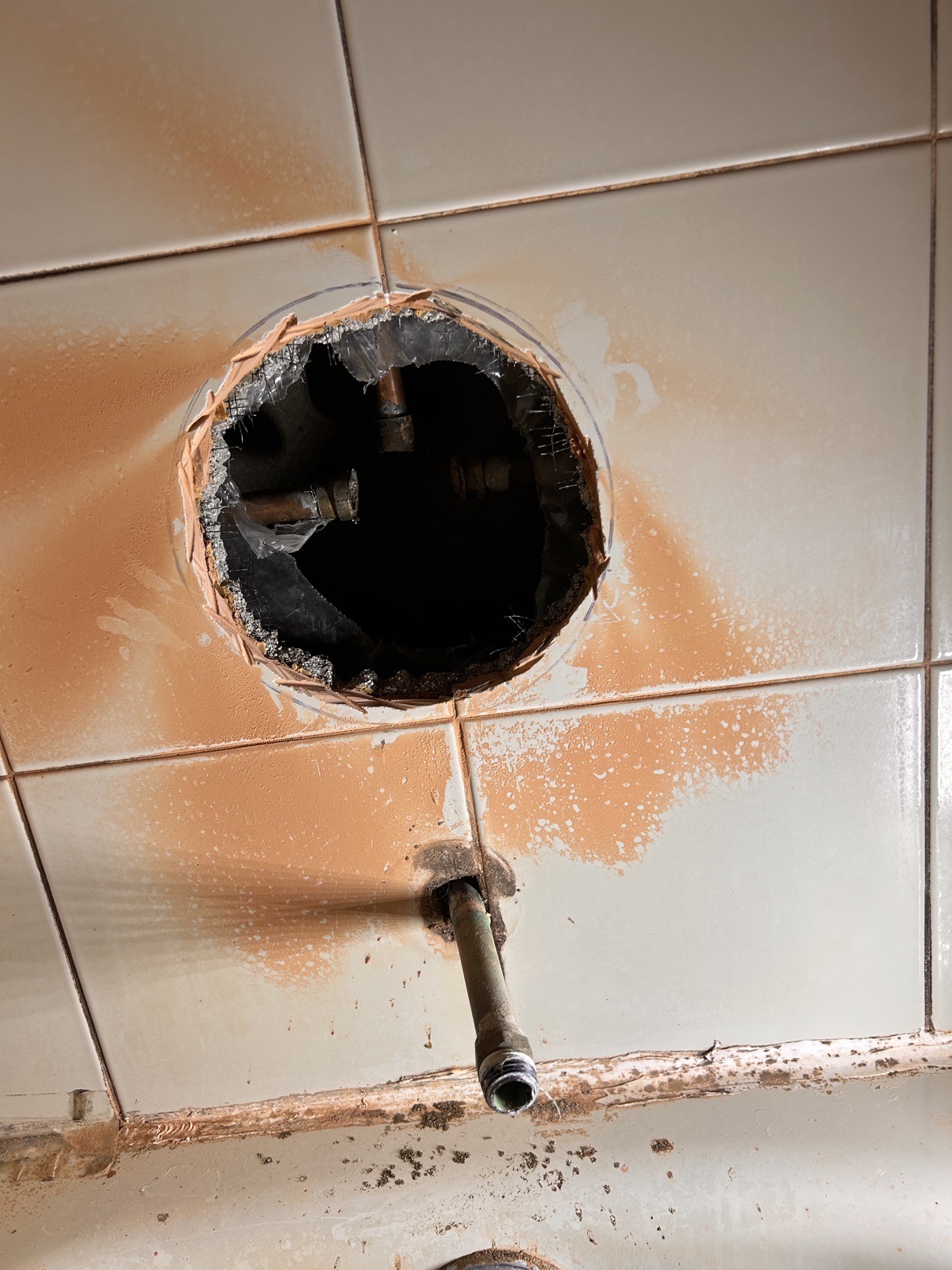
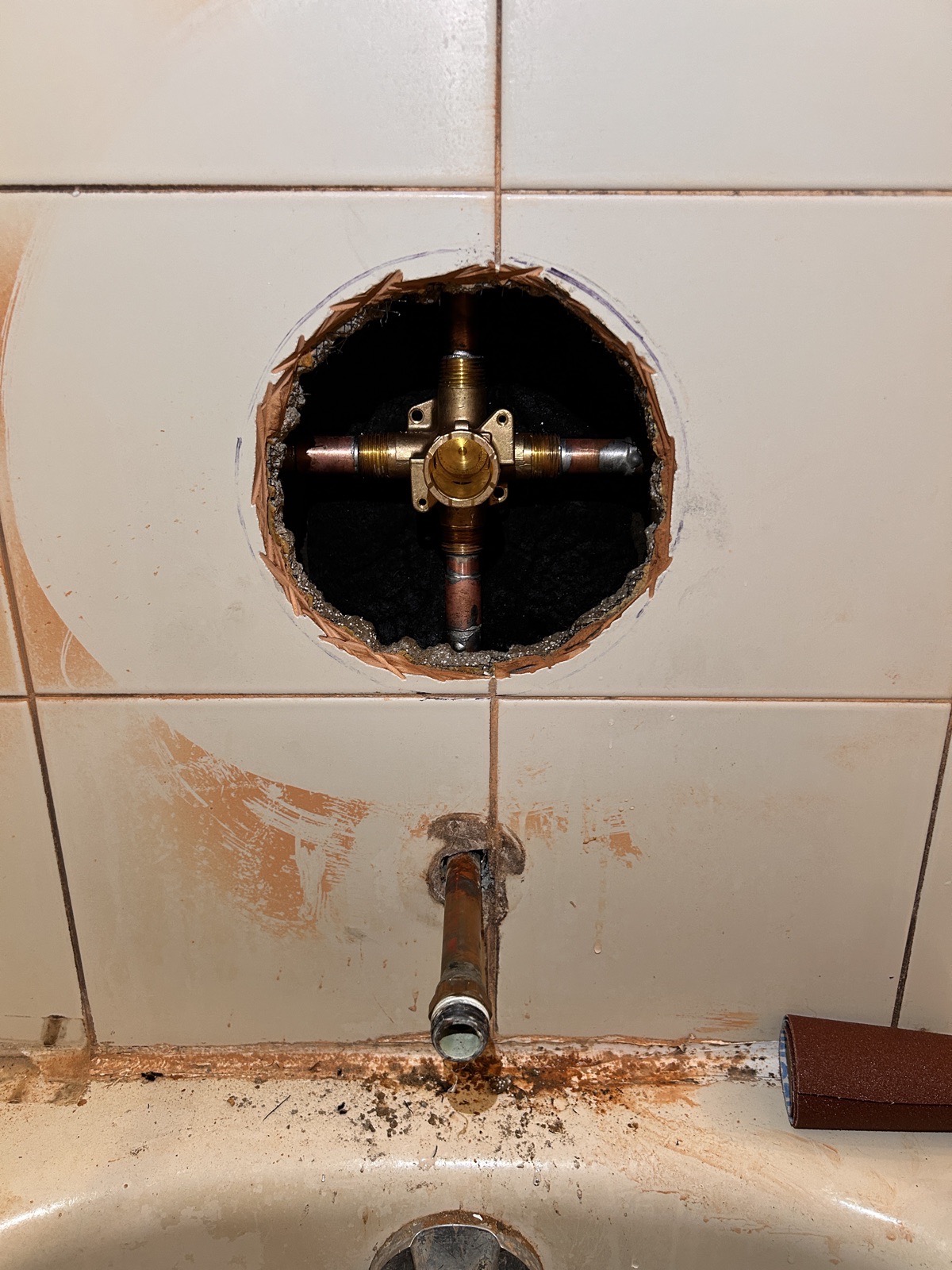
- Front access: a controlled opening in tile or wall finish around the valve.
- Rear access: an opening through the opposite wall when layout and finishes make that practical.
What decides the access route?
The installed valve, connection type, wall construction, opposite-room use, waterproof finish, available working space and planned restoration all matter. A photo of both sides of the wall is often more useful than a close-up alone.
Clarify restoration in writing
The plumbing quote should state who is responsible for tile, drywall, waterproofing, paint, access panels and other finish restoration. Do not assume those items are included unless the written scope says so.
The photographs show one real Raccoon Plumbing project. They do not mean every valve replacement requires this opening or follows the same finish-restoration plan.