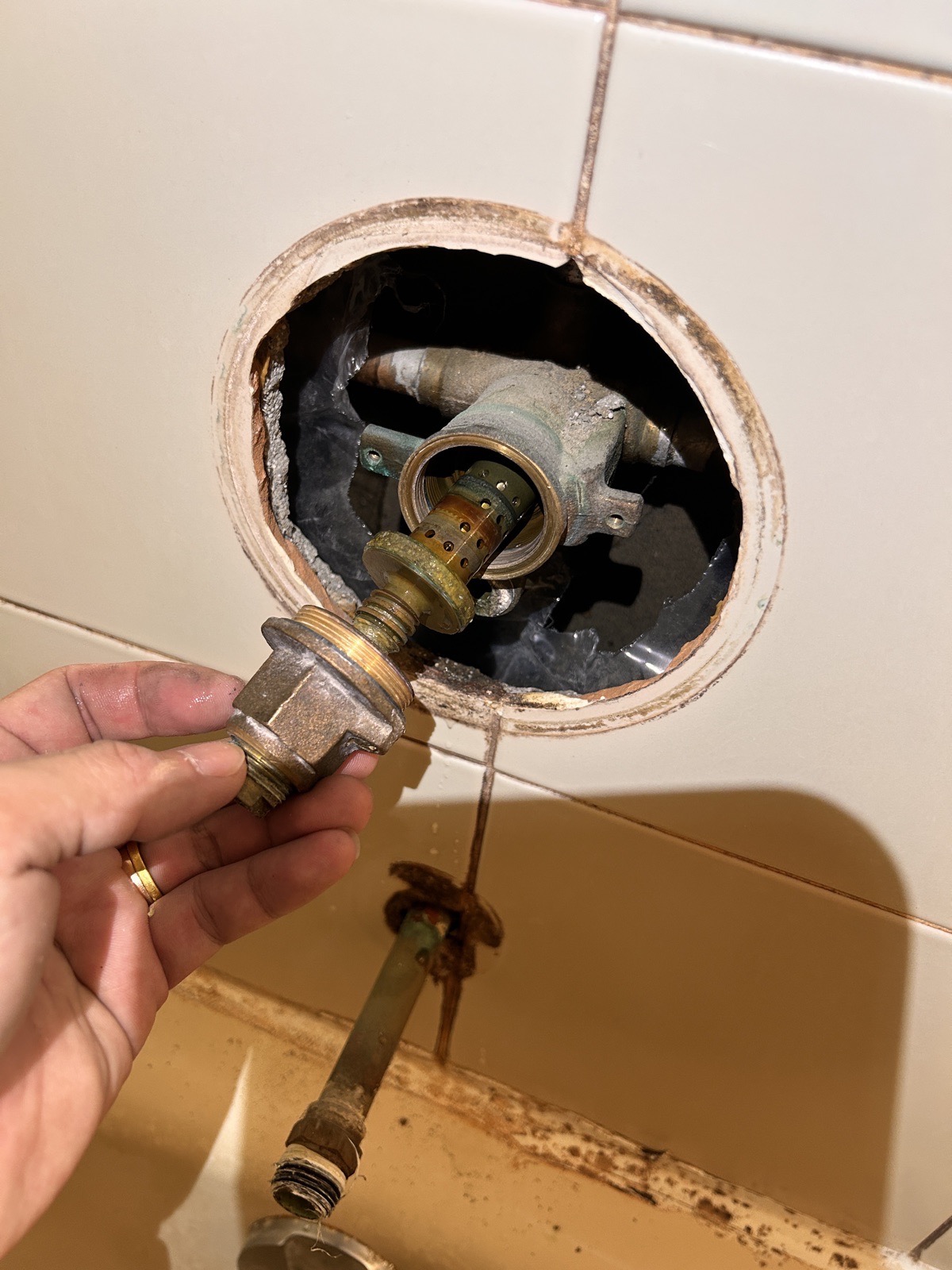
“Cartridge” is not a universal diagnosis.
Different valve designs use different internal assemblies. The correct first step is identifying the valve and failure—not assuming every control contains the same replaceable part.
Internal repair is more likely when
- The valve body is in usable condition
- The correct internal component can be identified and sourced
- The symptom matches a serviceable internal failure
- Removing the component does not reveal body damage or another concealed issue
Full valve replacement may be considered when
- The body is damaged, heavily deteriorated or leaking at a non-serviceable connection
- Correct internal parts are unavailable or unreliable
- The selected trim is incompatible with the existing body
- The planned bathroom work already requires access and a new valve system
What to send before requesting a quote
Send the visible trim, any brand markings, a short video of the symptom, the tub or shower overview and the wall behind the valve. Do not remove trim or open the wall solely to take photos.
This answer is general information for Vaughan, Richmond Hill, Markham and Etobicoke. Actual parts and access depend on the installed assembly.